WaveLink
WaveLink
WaveLink
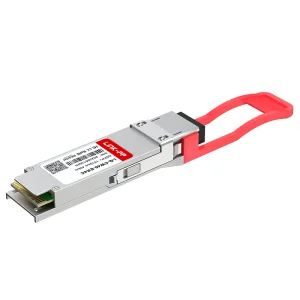
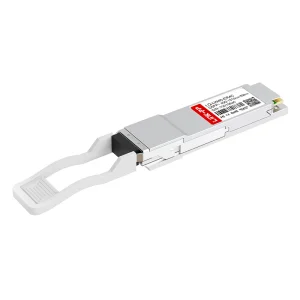
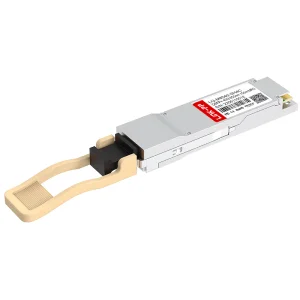
New Zealand's digital ecosystem is undergoing a profound structural transition. Driven by the government's Ultra-Fast Broadband (UFB) initiatives, the expansion of high-speed fiber backbones across major metro areas like Auckland, Wellington, and Christchurch has transformed local bandwidth demands. Simultaneously, the rise of sovereign data centers and edge nodes to host critical agricultural, financial, and scientific workloads is forcing local networks to upgrade from legacy 10G interfaces to high-density, low-latency 40G QSFP+ and 100G architectures.
Because New Zealand is geographically remote, global transit costs and latency optimization are critical. The nation relies heavily on submarine cable networks—including the Southern Cross NEXT and the Hawaiki Transpacific Cable—which link Auckland and regional landings directly with the USA, Australia, and Asia. Interconnecting these massive oceanic pipe terminals to local metropolitan distribution systems requires highly robust, industrial-grade optical transceivers capable of sustained multi-gigabit throughput. The 40G QSFP+ form factor acts as a core backbone technology for these local networks, balancing capital expenditure with long-term reliability.
Direct integration with subsea landing stations in Mangawhai and Raglan requires high-reliability transceivers with precise wavelength accuracy and superior thermal dissipation.
Establishing redundant, ring-topology fiber links across Auckland and Wellington CBDs requires high-performance single-mode modules (such as LR4 and ER4) that support long-reach linkages without signal degradation.
With local host requirements for data sovereignty, regional data centers are scaling up. Multi-mode QSFP+ SR4 and BiDi modules provide cost-effective, high-density intra-rack distribution.
Globally, the demand for optical communication modules is experiencing rapid expansion. Hyperscale clouds, AI cluster scaling, and 5G telecommunication networks continue to demand higher bandwidth. While 100G, 400G, and 800G modules dominate the heart of hyperscale data centers, 40G QSFP+ (Quad Small Form-factor Pluggable Plus) remains a foundational technology for enterprise campus networks, municipal metro networks, and industrial control rings.
The global optoelectronics supply chain has matured significantly, optimizing the production of 40G transceivers to achieve maximum yield, excellent compatibility, and energy efficiency. By utilizing advanced packaging technologies like COB (Chip-on-Board) and precise optical sub-assemblies (TOSA/ROSA), modern factories can produce 40G QSFP+ transceivers with power dissipation rates well below the standard 1.5W limit, dramatically reducing operational costs for large-scale operations.
Due to the diverse nature of New Zealand's commercial and geographical landscape, high-density optical transceivers serve several highly specialized applications:
New Zealand's world-leading agricultural industry relies heavily on IoT sensors and distributed edge compute resources in rural areas like Waikato and Canterbury. Backhauling massive telemetry and drone-imaging data sets through local regional exchanges requires 40G QSFP+ transceivers to manage high-bandwidth multiplexing from remote hubs back to metropolitan databanks.
Situated on the boundary of major tectonic plates, New Zealand has a vital interest in real-time earthquake and deep-sea monitoring networks (such as GNS Science). High-throughput computing infrastructures require extremely high-capacity optical connections to rapidly ingest and process huge seismic sensor arrays, utilizing 40G LR4 and ER4 transceivers for zero-loss telemetry transfer over metropolitan fiber rings.
New Zealand's academic and high-performance computing centers (NeSI) demand high-speed interface links to feed cluster processing frameworks. Low-power, high-density QSFP+ links ensure that regional university compute clusters in Dunedin, Christchurch, and Hamilton can seamlessly pool workloads over the REANNZ research network.
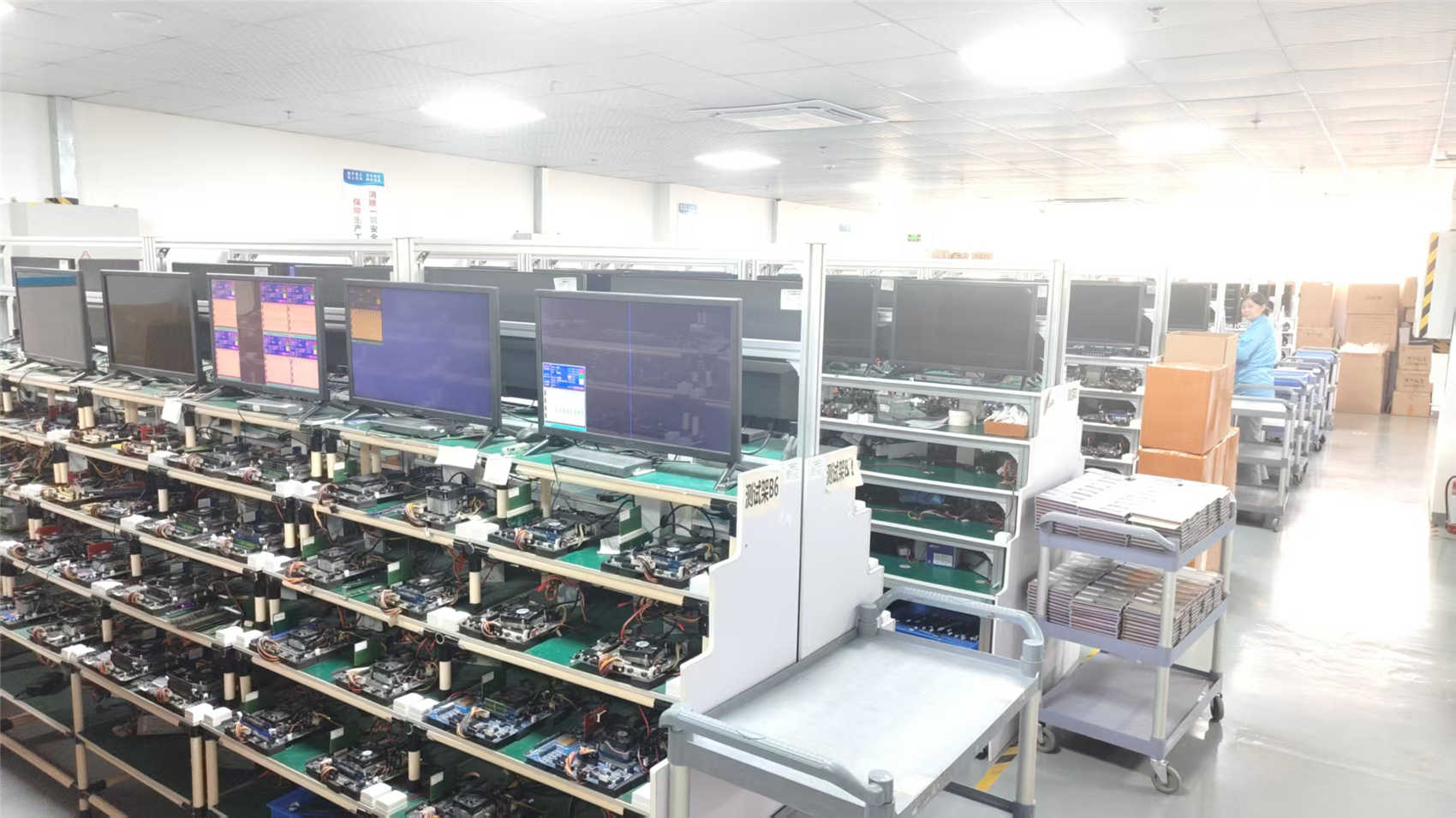
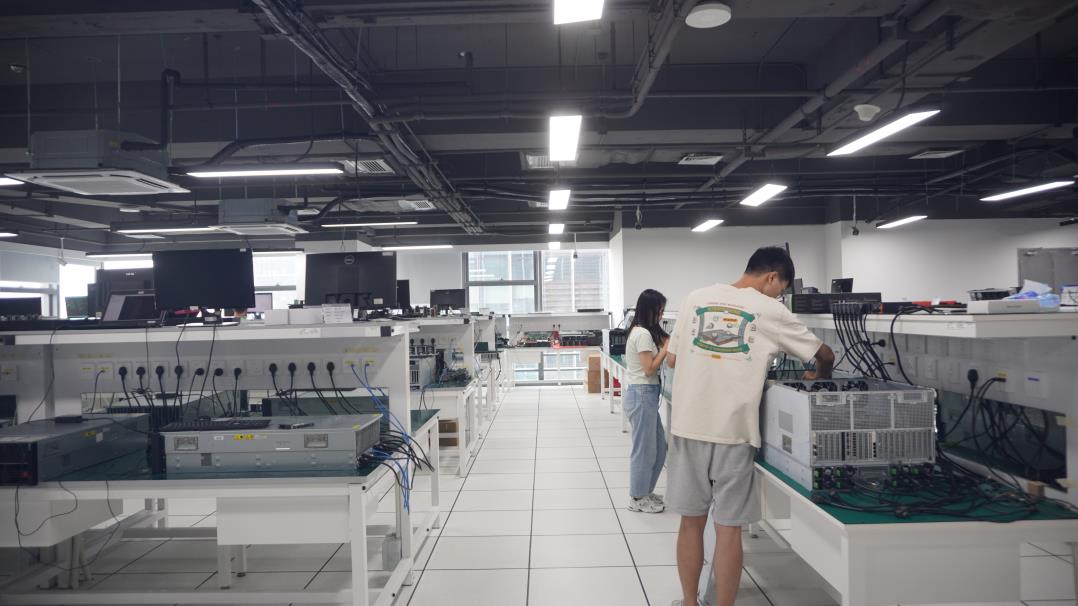
Founded in 2016, WaveLink Optoelectronics Co., Ltd. has developed into a premier global designer and manufacturer of high-performance optical transceivers and connectivity interfaces. Boasting an advanced production base spanning approximately 12,800㎡, our facilities feature class-100,000 cleanroom environments designed to eliminate micro-particle contamination during chip bonding and opto-coupling procedures.
Operating a strict, multi-stage quality management framework, we guarantee 100% compliance and reliability for every module shipped. Our procedures include:


As network interface speeds migrate globally towards 100G and 400G, the optimization path of 40G QSFP+ modules is focusing on interoperability, green energy efficiency, and cost reductions.
Transitioning from traditional discrete optical components to integrated silicon photonics designs, decreasing manufacturing cost and increasing module MTBF (Mean Time Between Failures) significantly.
Utilizing high-performance Digital Signal Processors (DSP) and laser driver advancements to drive down the module power consumption to under 1.2 Watts, minimizing cooling requirements in dense racks.
Aligning manufacturing capabilities to align with modern switch and network card architectures that support hybrid architectures, ensuring backward compatibility with enterprise systems.
Our export solutions for New Zealand are backed by a complete global trade system, ensuring smooth customs processing, fast dispatch, and comprehensive technical support.
We provide comprehensive firmware customization options. If your networks in Auckland or Wellington run on specialized, vendor-locked switches (e.g. Cisco, Juniper, Arista, Ciena), our engineers will pre-code the EEPROM configurations to guarantee plug-and-play compatibility, bypassing strict third-party transceiver validation flags.
Through our alliances with over 1,200 upstream partners, WaveLink ensures constant access to raw semiconductors, lasers, and printed circuit board assemblies. New Zealand businesses can secure contract pricing models with guaranteed inventory allocations, mitigating global lead-time spikes.
From initial design-in testing to post-implementation analysis, our dedicated technical engineering support team of 220+ technical members helps network designers troubleshoot physical layer issues, optical budget variances, and DDM diagnostics interpretation.
Contact WaveLink's optoelectronic experts to receive detailed datasheets, custom configuration options, and tailored bulk pricing for New Zealand optical network projects.
Send Inquiry Now