WaveLink
Choosing an optical transceiver supplier is no longer a simple price comparison. Global buyers must examine compatibility, performance, delivery stability, and technical support. A module may appear attractive on paper, yet fail during installation. That risk becomes expensive in data centers, telecom networks, and industrial systems.
Vladimir Kozlov, founder and CEO of LightCounting, has stated, “The best supplier is not always the one with the lowest price.” This principle guides our selection of the 10 Best Optical Transceiver Suppliers for Global Buyers. Each company is considered through practical indicators, including product range, interoperability, quality testing, customization, and after-sales service. Real experience matters. So does documented evidence.
Look beyond the label.
The strongest suppliers usually provide clear datasheets, reliable coding information, and test reports for demanding environments. They should support common standards, such as 100G, 400G, and emerging 800G solutions. Buyers should also verify optical budgets, connector types, operating temperatures, and firmware requirements before ordering. Small technical mismatches can stop an entire link.
This list is useful, but it is not perfect. Supplier capabilities change, regional stock varies, and one company may suit a carrier better than an enterprise network. Pricing can also shift with component shortages and demand. Therefore, readers should treat this guide as a practical starting point, not a final purchasing decision. Careful validation remains necessary. A dependable optical transceiver supplier should reduce uncertainty before the shipment arrives, not explain failures afterward.
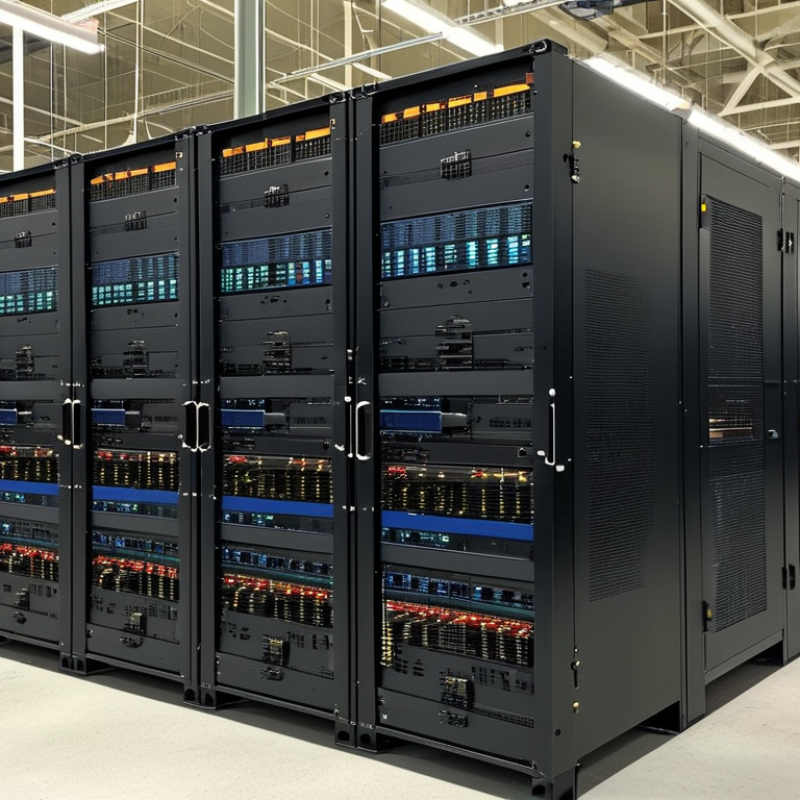
Optical transceiver suppliers do more than ship small pluggable modules. For global buyers, they connect fiber design, network speed, and long-term service. A capable supplier explains whether a 10G, 25G, 100G, or 400G optic fits the switch, fiber type, and transmission distance. They also provide data sheets, compatibility records, test reports, and clear labeling. Surprises happen.
Reliable suppliers maintain documented quality controls from component sourcing to final inspection. They test optical power, wavelength accuracy, temperature performance, and error rates before shipment. They should also offer traceability through serial numbers and batch records. This evidence helps network engineers investigate failures instead of guessing. Independent certifications and alignment with recognized technical standards add useful confidence, but paperwork alone cannot prove field performance.
Support matters when equipment crosses borders. Strong suppliers provide responsive technical guidance, realistic lead times, packaging suited for long transport, and replacement procedures. They understand that a module working in a laboratory may behave differently in a dusty rack or a hot data center. I have seen buyers focus on unit price and overlook firmware compatibility or return handling. That choice can increase downtime later. No supplier predicts every deployment perfectly. Honest communication about limitations is often more valuable than an impressive product sheet. Teams should request samples, verify interoperability, and record test results before placing large orders.
Optical transceiver suppliers typically provide modules across multiple Ethernet speeds and fiber distances. The examples below use representative maximum reaches from widely used Ethernet optical specifications; actual performance depends on fiber type, connector quality, and network design.
Representative references include 10GBASE-SR/LR, 25GBASE-SR, 100GBASE-SR4/LR4, and 400GBASE-SR8/LR8 optical configurations. Short-reach modules generally use multimode fiber, while 10 km-class modules commonly use single-mode fiber.
When comparing global optical transceiver suppliers, product fit matters more than catalog size. Check form factors, wavelengths, transmission distances, data rates, and operating temperatures. A reliable supplier should provide clear datasheets, compatibility lists, and test reports. Ask whether modules support your switches, routers, and network management systems. A polished website proves little.
Check form factors, wavelengths, transmission distances, data rates, and operating temperatures.
Quality control deserves close attention. Look for sample testing, EEPROM verification, eye-diagram analysis, BER testing, and burn-in records. Traceable serial numbers and production-lot records can simplify future troubleshooting.
Delivery capability also matters. Compare lead times, minimum order quantities, warehouse locations, and export documentation.
Strong suppliers offer engineers, not only sales contacts. Review warranty terms and replacement procedures carefully.
Low prices may hide higher failure costs. No comparison is perfect.
Tips:
Request samples before placing a large order. Test them in your actual equipment and under realistic temperatures. Compare measured performance with the promised figures. Check whether technical documents match the delivered modules. Ask for references from buyers with similar network sizes. Also, keep a written scoring sheet for compatibility, quality, support, delivery, and total cost. It may feel slower, but memory often favors the cheapest offer unfairly.
Choosing among the 10 best optical transceiver suppliers requires more than comparing prices. Product strength often reveals the real difference. Experienced suppliers offer stable 10G, 25G, 100G, and 400G modules for data centers, telecom networks, and enterprise links. Their products should support accurate digital diagnostics, consistent optical performance, and practical compatibility with major switching platforms.
Some suppliers stand out in high-density data center modules. Others focus on CWDM and DWDM solutions for long-distance fiber networks. Industrial suppliers may provide hardened transceivers for wider temperature ranges, vibration, and dusty cabinets. Custom coding is valuable when network operators need specific firmware, connector types, or transmission distances. Small details matter. A poor latch can slow maintenance.
Reliable suppliers also show strength through testing. Look for temperature cycling, optical power checks, bit-error testing, and documented quality procedures. Clear datasheets should state wavelength, reach, power consumption, and operating conditions. Technical teams with field experience can help diagnose signal loss instead of simply replacing modules. That support builds trust.
No supplier leads in every category. A low-cost module may perform well in a controlled data center but struggle in an outdoor enclosure. I have seen specifications appear impressive while installation results were less consistent. Buyers should request samples, verify interoperability, and review warranty terms before large orders. Product strength is useful only when it survives real network conditions.
| Supplier Profile | Primary Product Strength | Common Product Portfolio | Typical Data Rates | Typical Reach Options | Optical Technology | Standards & Compliance | Best-Fit Applications |
|---|---|---|---|---|---|---|---|
| Supplier Profile 01 | High-volume Ethernet optics | SFP+ SFP28 QSFP28 QSFP-DD | 10G, 25G, 40G, 100G, 200G and 400G | 300 m to 10 km for common multimode and single-mode products | VCSEL, parallel single-mode, CWDM4 and LAN-WDM | IEEE 802.3; SFF-8472; SFF-8636; MSA form factors | Enterprise networks, campus backbones and hyperscale data centers |
| Supplier Profile 02 | Long-reach single-mode modules | SFP SFP28 QSFP28 QSFP-DD | 1G, 10G, 25G, 100G and 400G | 10 km, 20 km, 40 km and selected 80 km designs | DFB, EML, CWDM, LAN-WDM and PAM4 | IEEE 802.3; IEC laser-safety requirements; RoHS and MSA specifications | Metro access, data-center interconnects and regional fiber networks |
| Supplier Profile 03 | Coarse and dense wavelength-division multiplexing | CWDM SFP+ DWDM SFP+ 100G QSFP28 400G ZR-class | 10G, 25G, 100G, 200G and 400G | 10 km to 80 km; amplified systems can extend beyond this range | CWDM, DWDM, tunable optics and coherent modulation | ITU-T wavelength-grid recommendations; IEEE 802.3; applicable MSA specifications | Fiber-capacity expansion, metro transport and wavelength-managed networks |
| Supplier Profile 04 | Data-center short-reach connectivity | SR DR FR DAC/AOC | 25G, 100G, 200G and 400G | 30 m to 500 m for multimode and parallel single-mode links | VCSEL, parallel SMF, PAM4 and active optical cable assemblies | IEEE 802.3; QSFP and QSFP-DD MSA; SFF-8636 digital diagnostics | Top-of-rack, leaf-spine and high-density server interconnects |
| Supplier Profile 05 | Industrial and harsh-environment optics | Industrial SFP SFP28 Ruggedized modules | 100M, 1G, 10G and selected 25G | 550 m to 120 km, depending on fiber and optical budget | Multimode, single-mode, CWDM and bidirectional optics | IEEE 802.3; extended-temperature classifications; RoHS; IEC safety requirements | Factory automation, transportation, utilities and outdoor cabinets |
| Supplier Profile 06 | Telecom access and passive optical networks | PON OLT PON ONU/ONT BiDi SFP OLT SFP+ | 1.25G, 2.5G, 10G and 25G access rates | Up to 20 km for many PON optical interfaces | 1310 nm upstream, 1490 nm downstream, 1577 nm and WDM-overlay designs | ITU-T G.984, G.987, G.989 and G.9807.1 families; applicable MSA specifications | FTTH, business access, mobile fronthaul and fiber access aggregation |
| Supplier Profile 07 | High-capacity 400G and 800G platforms | 400G QSFP-DD 400G OSFP 800G OSFP AOC | 400G and 800G Ethernet | 100 m, 500 m, 2 km and 10 km variants are commonly available | 8-lane and 4-lane PAM4, parallel SMF, DR4, FR4 and 2×FR4 architectures | IEEE 802.3; QSFP-DD and OSFP mechanical specifications; CMIS management interface | AI clusters, cloud data centers and high-bandwidth spine networks |
| Supplier Profile 08 | Interoperability and multi-vendor replacement modules | SFP SFP+ SFP28 QSFP QSFP28 | 1G, 10G, 25G, 40G and 100G | 100 m to 40 km across multimode and single-mode products | SR, LR, ER, BiDi, CWDM and copper-interface modules | IEEE 802.3; SFF-8472; SFF-8636; MSA mechanical and management specifications | Network refreshes, mixed-vendor environments and maintenance inventory |
| Supplier Profile 09 | Fiber monitoring and digital diagnostics | DOM-enabled SFP SFP28 QSFP28 Monitoring optics | 1G, 10G, 25G, 40G and 100G | 300 m to 80 km, subject to module type and link budget | Digital optical monitoring for temperature, voltage, bias current and transmit/receive power | SFF-8472; SFF-8636; CMIS; IEEE 802.3 physical-layer specifications | Managed networks, predictive maintenance and service-provider operations |
| Supplier Profile 10 | Customized and application-specific transceivers | Custom EEPROM coding BiDi CWDM Special-temperature | 1G, 10G, 25G, 100G and selected 400G designs | 100 m to 120 km, depending on optical architecture | BiDi, CWDM, DWDM, extended-temperature and protocol-specific configurations | IEEE 802.3; applicable MSA specifications; RoHS; IEC laser-safety requirements | Legacy upgrades, specialized deployments and low-volume engineering projects |
Global buyers need more than a long optical transceiver catalog. Compatibility begins with the network environment. Check fiber type, transmission distance, wavelength, connector design, and operating temperature. Confirm whether the module supports the required Ethernet rate and optical budget. A small mismatch can create unstable links, wasted installation time, or expensive replacements.
Standards provide a useful baseline, but they do not guarantee perfect interoperability. Reliable suppliers should document compliance with relevant industry specifications, electrical interfaces, monitoring functions, and safety requirements. Ask for test records, coding details, firmware behavior, and a clear warranty process. Field experience matters here. A supplier that explains known limitations is often more dependable than one promising universal compatibility.
Customization can improve fit without weakening consistency. Options may include specific reach, industrial temperature ratings, diagnostic thresholds, housing labels, or coded configurations. However, every change deserves validation. Request samples before volume purchasing, then test them with actual switches, fiber routes, and operating conditions. A controlled burn-in test can expose issues that laboratory data misses. No portfolio is perfect. I have seen purchasing teams focus on unit price and overlook replacement coding or documentation quality. That mistake becomes visible during deployment. Supplier comparison should therefore measure technical support, traceability, sample performance, and production stability alongside cost. Clear communication reduces surprises. Slightly slower, perhaps. Much safer.
Choosing optical transceiver suppliers requires more than comparing unit prices. Quality begins with documented testing, stable firmware, accurate coding, and clear interoperability records. Ask for temperature-cycle results, optical-power limits, bit-error-rate data, and sample test reports. A supplier should explain how each module was validated with your switches, fiber type, and transmission distance.
Support directly affects operational risk. The Uptime Institute’s Global Data Center Survey 2024 reported that 54% of respondents said their latest serious outage cost over $100,000. Therefore, evaluate response times, replacement procedures, remote troubleshooting, and escalation contacts before signing a contract. A low-cost module is not economical if one failed link keeps engineers awake for two nights. Support promises can also be vague. Demand measurable service levels.
Total cost includes energy, spares, labor, shipping, and disposal. The Lawrence Berkeley National Laboratory estimated that U.S. data centers consumed about 4.4% of national electricity in 2023, with demand potentially reaching 6.7% to 12% by 2028. Small power differences matter at scale. Compare power draw at real traffic rates, not only datasheet maximums. Review five-year failure data when available. Some buyers overvalue warranties and undervalue consistency. That is a mistake worth revisiting. Independent test evidence, transparent change notices, and regional inventory often provide stronger protection than an attractive quotation.
A capable supplier provides modules, datasheets, compatibility records, test reports, and clear labeling. Serial numbers and batch records support later troubleshooting.
Confirm the data rate, form factor, wavelength, connector, fiber type, and transmission distance. Test samples in the actual switch before ordering heavily.
Review optical power, wavelength accuracy, temperature range, power consumption, and bit-error results. Promised figures may look better than field performance.
Records can show sample testing, EEPROM checks, eye-diagram analysis, burn-in, and error testing. They help engineers investigate failures instead of guessing.
Compare lead times, minimum order quantities, warehouse locations, packaging, and export documents. Long transport needs sturdy packaging. Delays are costly.
Not necessarily. A cheaper module may create replacement work, downtime, or compatibility problems later. My first price comparison might still be incomplete.
A module suitable for a cool data center may struggle in a hot, dusty cabinet. Check operating temperatures, vibration exposure, and enclosure conditions.
Useful support includes technical guidance, realistic replacement procedures, warranty details, and responsive troubleshooting. Good support explains limitations honestly, not only strengths.
Choosing the right optical transceiver supplier is essential for building reliable, scalable, and cost-effective communication networks. These suppliers provide modules for data centers, telecom systems, enterprise networks, and other high-speed applications, supporting various transmission distances, data rates, fiber types, and network architectures. When comparing global suppliers, buyers should examine product coverage, technical performance, manufacturing consistency, compliance with industry standards, compatibility with existing equipment, and the ability to deliver customized solutions.
A strong evaluation should also consider testing procedures, quality control, warranty policies, technical support, delivery capacity, and long-term supply stability. Although purchase price is important, total cost should include installation, maintenance, replacement, compatibility risks, and operational efficiency. By assessing product strengths, interoperability, customization options, service responsiveness, and overall value, global buyers can select an optical transceiver supplier that meets current requirements while supporting future network upgrades and dependable international deployment.
