WaveLink WaveLink

2026 Top LC Connector Transceiver Types for Global Buyers

Time:2026-10-23 Author:Amelia
0%

Choosing the right LC connector transceiver in 2026 requires more than comparing price and transmission speed. Global buyers must match the module with switch ports, fiber type, link distance, wavelength, and operating temperature. A 10G SFP+ module may suit a short multimode connection, while a 25G SFP28 model may better support modern data-center uplinks. Small details matter. A duplex LC interface can prevent costly installation changes.

This guide examines the leading LC connector transceiver types for enterprise networks, data centers, telecommunications systems, and industrial deployments. It considers single-mode and multimode optics, standard and extended-reach versions, BiDi designs, CWDM and DWDM options, and temperature-rated modules. Practical selection also involves checking DOM support, transmission budgets, coding requirements, and interoperability with specific equipment brands. A product that works in one switch may fail in another because of firmware, EEPROM, or vendor-locking issues.

Real purchasing decisions are rarely perfect.

The recommendations reflect technical documentation, industry standards, supplier verification, and common field-testing practices. However, specifications can change, and published reach figures may depend on connector quality, fiber condition, and installation workmanship. Buyers should confirm current datasheets, certification records, warranty terms, and sample compatibility before placing large orders. This review does not assume that the most expensive optic is the most reliable. It focuses on evidence, practical risks, and measurable value. Some conclusions may need revision as 800G platforms, improved monitoring features, and new interoperability policies develop. That uncertainty deserves attention, not concealment.
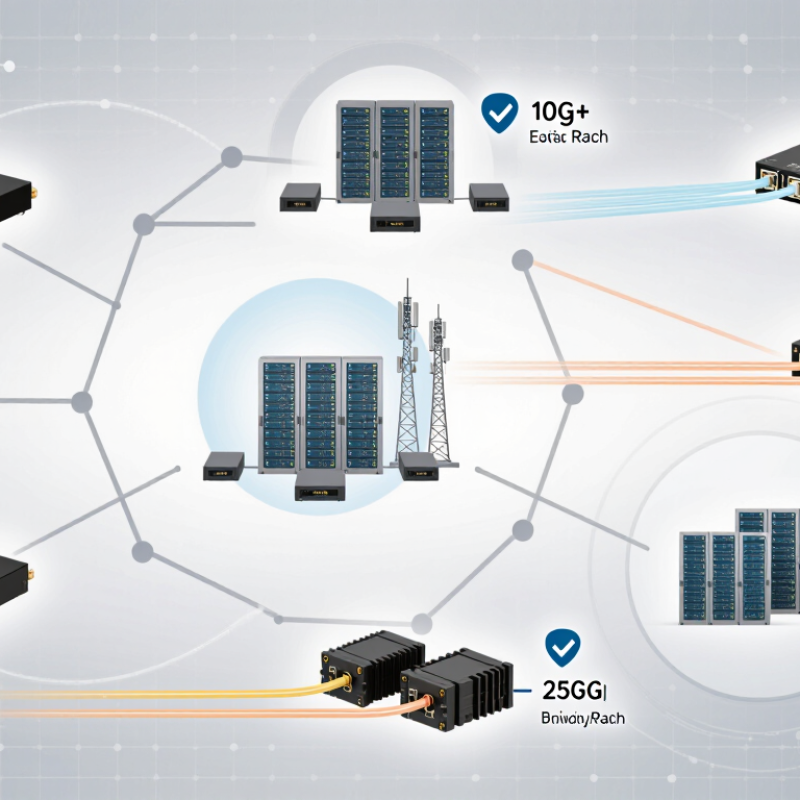
2026 Top LC Connector Transceiver Types for Global Buyers

What LC Connector Transceivers Are and How They Work

LC connector transceivers convert electrical network signals into light, then send them through fiber. Inside, a transmitter drives a laser, while a receiver uses a photodiode to restore the signal. Duplex LC uses two small fibers: one carries data outward, and the other carries data inward. The connector feels simple. The alignment is not.

For 2026 deployments, buyers may compare 1G SFP, 10G SFP+, 25G SFP28, and 100G QSFP28 transceivers with LC interfaces. Single-mode LC modules suit longer campus and metropolitan links. Multimode LC modules remain practical for shorter data-center runs. LightCounting’s market reviews show continued growth in data-center optical demand, especially as AI clusters increase bandwidth pressure. Cisco’s Annual Internet Report projected 5.3 billion internet users and 29.3 billion connected devices by 2023. That forecast explains the need for denser, faster links, although forecasts can miss sudden technology shifts.

Tips: Check fiber type, wavelength, reach, temperature range, and switch compatibility before ordering. A 1310 nm single-mode module should not be paired casually with multimode fiber. Clean the LC end face with a fiber-cleaning tool. Dust can create unstable readings. Also verify whether a 100G module requires duplex LC or another connector design. The label may look clear, but specifications sometimes leave room for interpretation. A short compatibility test remains wiser than a large replacement order.

Main LC Transceiver Types Available in 2026

In 2026, LC transceivers remain common in data centers, campus networks, and telecom access systems. SFP modules usually support 1G links, while SFP+ handles 10G connections. SFP28 is designed for many 25G applications.

These modules commonly use duplex LC connectors for separate transmit and receive paths. Buyers should match the transceiver with switch ports, fiber type, reach, and operating temperature.

Single-mode LC transceivers support long-distance links across narrow-core fiber. Multimode LC versions suit shorter connections inside buildings. BiDi LC transceivers send and receive signals through one fiber strand.

They require matched wavelength pairs at both ends. CWDM and DWDM LC modules support wavelength planning and higher fiber utilization. Some 100G optical designs also use duplex LC interfaces, although the internal technology differs.

The connector looks familiar. The optical requirements are not.

Practical checks prevent expensive mistakes. Confirm speed, wavelength, reach, fiber category, and host-device compatibility before ordering. Digital monitoring can report temperature, voltage, and optical power during operation.

Field experience shows that labeled reach is not guaranteed in every installed pathway. Patch panels, bends, dirty end faces, and aging fiber can reduce performance. Clean the connectors carefully. Check the fiber path. Do not guess.

A specification sheet may appear complete, yet compatibility details can remain unclear. Buyers should also review coding requirements and installation conditions, because a technically suitable module may still fail in a restricted platform.

Key Specifications for Comparing LC Transceivers

2026 Top LC Connector Transceiver Types for Global Buyers

Key Specifications for Comparing LC Transceivers

LC transceivers remain practical for dense fiber links because their push-pull connector saves rack space. Common choices include 10G LR, 25G LR, 100G LR4, and 100G CWDM4 modules. Always match the optical design to the installed fiber. A single-mode LC module cannot replace a multimode optic without performance loss.

Speed is only one filter. Check wavelength, transmission distance, fiber type, connector polish, and maximum power consumption. For example, 100G LR4 typically supports up to 10 kilometers over duplex single-mode fiber, while 100G CWDM4 usually targets shorter data-center links near 2 kilometers. Real distance can fall with dirty connectors, sharp bends, or excessive splice loss.

Small details matter.

LightCounting reported that the global optical transceiver market exceeded 10 billion dollars in 2023, driven by data-center demand. Its market analysis also identified higher-speed modules as a major growth area through 2026. Buyers should therefore verify 400G and emerging 800G compatibility carefully, rather than trusting speed labels alone. Power draw, operating temperature, digital diagnostics monitoring, bit-error performance, and host-side electrical signaling deserve equal attention. IEEE 802.3 specifications provide a reliable baseline, but compliance does not guarantee interoperability in every switch. I have seen links pass laboratory tests yet fail after deployment because firmware and receiver tolerance were overlooked. That uncomfortable gap still deserves more testing.

2026 Top LC Connector Transceiver Types for Global Buyers - Key Specifications for Comparing LC Transceivers
Transceiver Type Typical Form Factor Nominal Data Rate Optical Wavelength Maximum Reach Fiber Type LC Interface Duplex / BiDi Typical Application Key Buying Considerations
1000BASE-SX SFP 1.25 Gb/s 850 nm Up to 550 m Multimode fiber; OM2, OM3 or OM4 Duplex LC Two-fiber duplex Campus networks, enterprise access and short data-center links Low-cost short-reach option; actual distance depends on fiber category and modal bandwidth.
1000BASE-LX SFP 1.25 Gb/s 1310 nm Up to 10 km Single-mode fiber; limited multimode operation may require a mode-conditioning patch cable Duplex LC Two-fiber duplex Building-to-building and metropolitan access links Confirm single-mode support, optical budget and compatibility with legacy multimode plant.
10GBASE-SR SFP+ 10.3125 Gb/s 850 nm Up to 300 m on OM3; up to 400 m on OM4 Multimode fiber; OM3, OM4 or OM5 Duplex LC Two-fiber duplex Server connections, top-of-rack links and data-center switching Best for short links; verify the installed fiber grade and required polarity.
10GBASE-LR SFP+ 10.3125 Gb/s 1310 nm Up to 10 km Single-mode fiber Duplex LC Two-fiber duplex Core, aggregation and inter-building connections Check link budget, receiver overload limits and interoperability with the host platform.
10GBASE-ER SFP+ 10.3125 Gb/s 1550 nm Up to 40 km Single-mode fiber Duplex LC Two-fiber duplex Long-distance campus and metropolitan networks Use optical attenuators when required; verify dispersion limits and receiver power.
25GBASE-SR SFP28 25.78125 Gb/s 850 nm Up to 70 m on OM3; up to 100 m on OM4; up to 100 m on OM5 Multimode fiber Duplex LC Two-fiber duplex High-density server-to-switch data-center links Confirm host port coding, lane speed and the fiber distance required by the installation.
25GBASE-LR SFP28 25.78125 Gb/s 1310 nm Up to 10 km Single-mode fiber Duplex LC Two-fiber duplex Data-center interconnects and aggregation networks Validate host-device support, forward-error-correction requirements and optical budget.
40GBASE-LR4 QSFP+ 41.25 Gb/s aggregate Four wavelengths near 1310 nm Up to 10 km Single-mode fiber Duplex LC Two-fiber duplex using parallel optical lanes over wavelength multiplexing 40G backbone, aggregation and data-center interconnects Ensure the switch supports QSFP+ 40G operation and confirm optical lane interoperability.
100GBASE-CWDM4 QSFP28 103.125 Gb/s aggregate Four wavelengths in the 1271–1331 nm range Up to 2 km Single-mode fiber Duplex LC Two-fiber duplex with four-wavelength multiplexing Short data-center interconnects and leaf-spine networks Designed for single-mode links shorter than 2 km; confirm FEC and breakout requirements.
100GBASE-LR4 QSFP28 103.125 Gb/s aggregate Four wavelengths near 1310 nm Up to 10 km Single-mode fiber Duplex LC Two-fiber duplex with four-wavelength multiplexing Campus backbone, metropolitan links and data-center interconnects Compare optical budget, FEC mode, host coding and interoperability before purchase.
100GBASE-ER4 QSFP28 103.125 Gb/s aggregate Four wavelengths near 1310 nm Up to 40 km Single-mode fiber Duplex LC Two-fiber duplex with four-wavelength multiplexing Extended-reach metropolitan and regional networks Check dispersion, optical power, attenuation and whether the equipment requires host-side FEC.
100G PSM4 QSFP28 103.125 Gb/s aggregate 1310 nm Up to 2 km Single-mode fiber Usually MPO-12, not duplex LC Four-fiber parallel duplex Short-reach data-center interconnects Included as a comparison type; it is not normally an LC transceiver and should not be selected where LC cabling is mandatory.
200G FR4 QSFP56 212.5 Gb/s aggregate Four wavelengths in the 1271–1331 nm range Up to 2 km Single-mode fiber Duplex LC, often through two optical duplex paths Four-wavelength duplex architecture 200G leaf-spine networks and short data-center interconnects Port implementations vary; confirm the exact optical connector arrangement and FEC requirements.
400G DR4 QSFP-DD or OSFP 425 Gb/s aggregate 1310 nm Up to 500 m Single-mode fiber Usually MPO-12, not duplex LC Four parallel optical lanes High-density data-center switching Included as a comparison type; not normally suitable for LC-only cabling without an approved optical breakout solution.
400G FR4 QSFP-DD or OSFP 425 Gb/s aggregate Four wavelengths in the 1271–1331 nm range Up to 2 km Single-mode fiber Usually duplex LC through multiple optical paths Four-wavelength duplex architecture 400G data-center interconnects and high-capacity aggregation Connector implementation is platform-dependent; verify the number of LC ports, FEC mode and host electrical interface.
Specifications are typical reference values based on commonly deployed Ethernet optical categories. Actual reach depends on fiber quality, attenuation, dispersion, connector loss, optical power budget, coding, FEC and equipment compatibility. BiDi versions use a single LC connector and require matched complementary wavelengths at both ends.

LC Transceiver Selection by Network Application

For 2026, LC transceiver selection should begin with the network application, not the nominal speed.

TeleGeography’s 2024 Global Bandwidth Research Service reported a 29% rise in international bandwidth during 2023. This growth increases pressure on long-distance, reliable optical links.

Campus networks often use duplex LC transceivers for 10G or 25G connections. Multimode optics suit short cable paths, usually inside buildings. Singlemode LC optics are safer for longer runs and future upgrades.

In regional data centers, 100G DR, FR, or 400G FR4 modules with duplex LC interfaces can simplify patch-panel management. Check fiber type, reach, wavelength, and polarity before ordering. Small mismatches cause expensive troubleshooting.

Check fiber type, reach, wavelength, and polarity before ordering. Small mismatches cause expensive troubleshooting.

LightCounting’s 2024 Optical Transceiver Market Forecast connects AI infrastructure growth with rising demand for 800G and 1.6T optics. However, high-density parallel optics commonly use multi-fiber connectors, not LC. LC remains practical at cross-connects and selected duplex designs. A neat speed-based rule is tempting. It is not always right. Buyers should compare port density, airflow, power limits, and maintenance access. One overlooked detail is transceiver coding, which may affect interoperability. Test samples in the target switch environment before large deployment. Forecasts can change. Procurement plans should leave room for that.

Global Buyer Considerations for Compatibility and Supply Chains

LC transceivers remain practical for structured fiber links, especially where space and serviceability matter. Global buyers should compare duplex LC, simplex BiDi LC, multimode, single-mode, CWDM, and DWDM options. Each type solves a different distance, wavelength, and fiber-count problem.

Compatibility deserves more attention than headline speed. Check the host port, optical wavelength, reach, fiber type, polarity, and diagnostic support before ordering. Duplex LC modules use two fibers. BiDi modules use one fiber and require matched upstream and downstream wavelengths. Small errors can leave a link dark. The connector may fit, yet the optical budget may fail. Verify insertion loss, receive sensitivity, and operating temperature against the equipment manual and relevant IEC or IEEE requirements.

Supply planning is becoming less forgiving. Cisco’s Annual Internet Report estimated global IP traffic at 396 exabytes per month in 2022. Synergy Research Group reported that hyperscale capital expenditure exceeded 200 billion dollars in 2024. These figures suggest continued pressure on optical components, testing capacity, and delivery schedules. Buyers should qualify at least two approved sources, request serialized test records, and confirm firmware interoperability before volume releases. Keep realistic safety stock for common LC modules, but avoid excessive inventory for rapidly changing speeds. That balance is difficult. I would also question any forecast that assumes every 400G deployment will use LC; many high-density designs require parallel-fiber interfaces instead.

2026 Top LC Connector Transceiver Types for Global Buyers

Typical maximum reach of widely deployed LC-compatible optical transceiver families. Actual performance depends on fiber grade, link budget, host-device support, and regional supply availability.

Short-reach multimode options are commonly selected for data-center connections, while single-mode LR options support longer campus and metro links. Buyers should verify the host port form factor, optical wavelength, fiber type, duplex or BiDi LC configuration, transmission speed, reach, DOM support, and required interoperability before ordering. The reference values reflect commonly specified IEEE Ethernet reach classes, including 1000BASE-SX/LX, 10GBASE-SR/LR, and 25GBASE-SR/LR.

FAQS

What are the main LC transceiver types available in 2026?

Common options include SFP, SFP+, and SFP28 modules for 1G, 10G, and 25G links. Duplex LC uses separate transmit and receive fibers. Simplex options use one fiber.

How should I choose between multimode and single-mode LC transceivers?

Multimode suits short indoor links, such as cables between nearby racks. Single-mode supports longer distances and future network expansion. Measure the pathway first.

What is a BiDi LC transceiver?

A BiDi module sends and receives signals through one fiber strand. Both ends need matching wavelength pairs. A mismatch can leave the link dark.

Are LC connectors suitable for 100G or faster networks?

Some 100G designs use duplex LC interfaces. Many higher-density systems use multi-fiber connectors instead. The connector looks familiar. The optics may differ.

Which details must I check before ordering an LC transceiver?

Confirm speed, wavelength, reach, fiber type, polarity, and host-port compatibility. Also check operating temperature and coding requirements. Do not guess.

Can the labeled transmission distance always be achieved?

No. Patch panels, sharp bends, dirty end faces, and aging fiber can reduce performance. Insertion loss and receive sensitivity also matter. The listed reach is only a guide.

What are CWDM and DWDM LC transceivers used for?

They support wavelength planning and improve fiber utilization. They can carry different optical channels through planned wavelength spacing. Design carefully.

How can buyers reduce supply and compatibility problems?

Qualify at least two approved sources and request serialized test records. Keep reasonable stock for common modules, but avoid excessive inventory. Forecasts can change.

Conclusion

This guide explains what an LC connector transceiver is, how it converts electrical signals into optical signals, and why it remains important for efficient fiber network connectivity in 2026. It reviews major types, including single-mode and multimode options, different data rates, transmission distances, wavelengths, and duplex or bidirectional configurations. Readers will also learn how to compare essential specifications such as connector format, fiber compatibility, optical power, receiver sensitivity, operating temperature, power consumption, and equipment interoperability.

The article further connects LC transceiver selection with practical network applications, from data center links and enterprise networks to telecommunications and access infrastructure. For global buyers, it highlights the importance of checking coding and compatibility requirements, product quality, documentation, testing standards, lead times, regional availability, packaging, warranty support, and supply-chain reliability. These considerations can help purchasers choose suitable solutions, reduce deployment risks, and maintain consistent network performance across different regions and operating environments.

Amelia

Amelia

Amelia is a seasoned marketing professional with a wealth of expertise in our company’s core offerings. With an unwavering passion for driving growth and innovation, she plays a pivotal role in shaping our marketing strategies and enhancing brand visibility. A key aspect of her responsibilities......